The proposed system
Drawn before it is built.
This page shows the architecture as it is designed on paper: the node, the mesh, the on-device intelligence, and how the system would degrade gracefully when the field gets difficult. Everything here is proposed — no part of it has been built yet.
Last reviewed · Reading these diagrams: every element carries a Proposed badge; every 3D view carries its honesty caption; unbuilt elements are described with would / will / is designed to — never does / is / delivers.
Concept illustration — proposed system, not final hardware
The node, exploded.
Proposed
The field node as designed on paper: a housing open to the elements it measures, a PCB stack carrying the radio and compute, a sensor array for soil and microclimate, and a battery sized for seasons, not days. Scroll to separate the stack along the drawing's axis — the way an engineer would open the drawing before opening the device.
Scroll — the diagram responds
Simulated behavior — proposed system
The mesh, healing itself.
Proposed
This is how the self-healing concept works — a simulation of intended behavior, not a recording of a live system. Nodes relay for one another; when one drops, its traffic would reroute through its neighbors instead of going dark. Watch a drop-and-reroute cycle, or trigger one yourself.
Concept illustration — proposed system
The field, in section.
Proposed
Agronomy happens in depth, not on the surface. The proposed array would place sensor stakes at multiple soil depths along a transect of the field, so irrigation guidance could account for where the water actually is. Scroll to sweep the section plane across the field — the drafting-table view of the design.
Scroll — the section plane sweeps
Authored stills
Concept renders, drawn in the blueprint register.
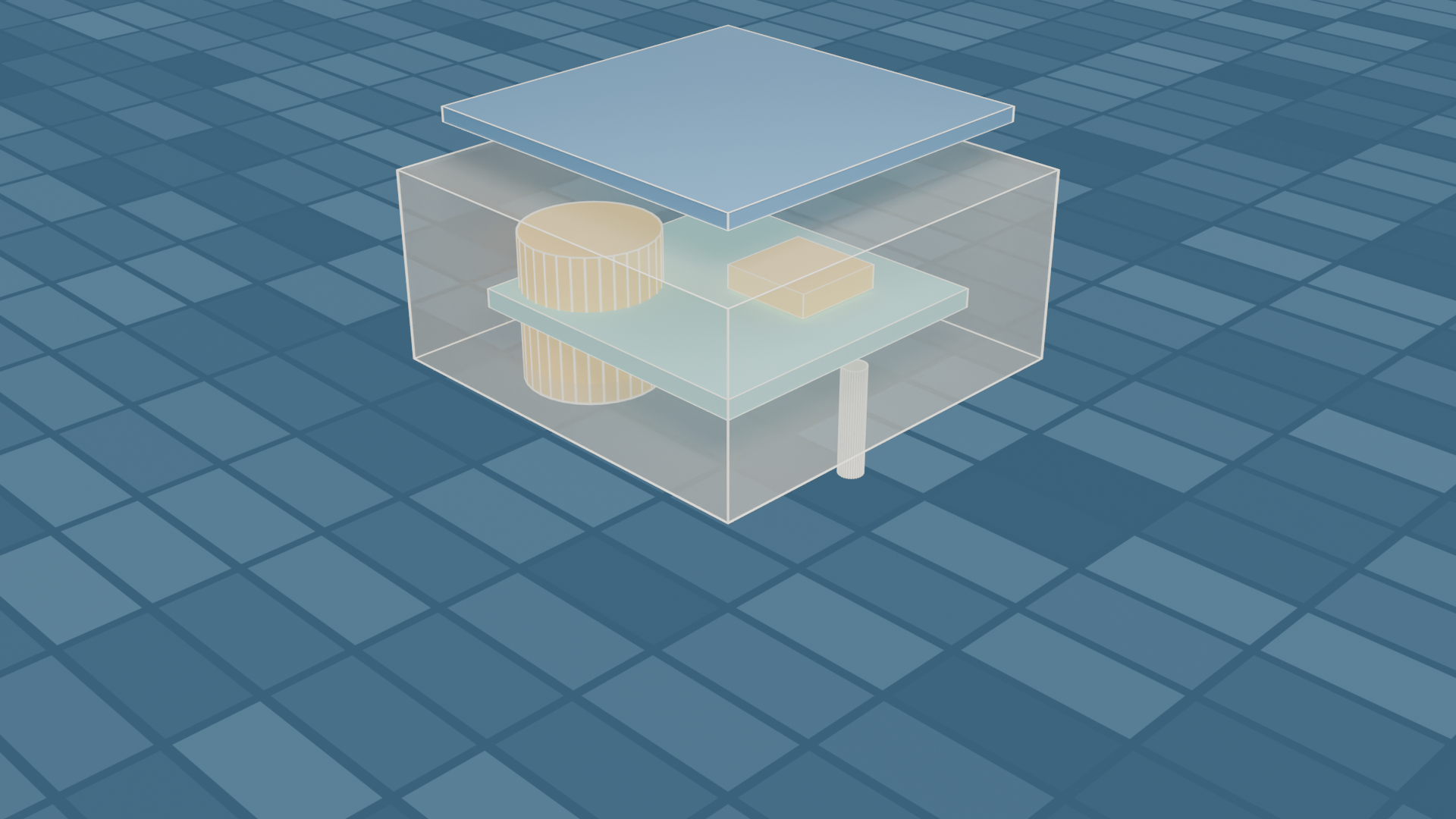
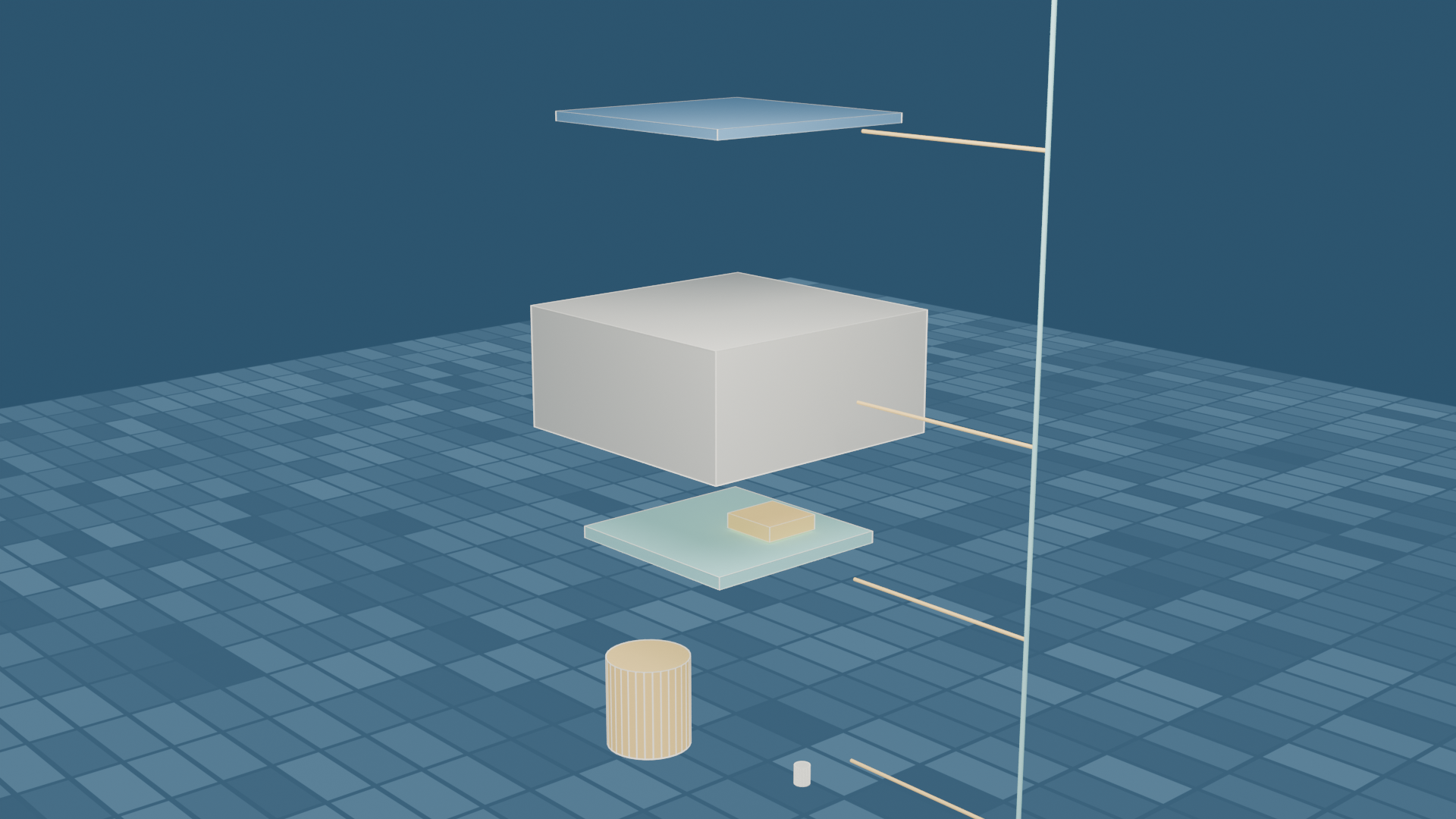
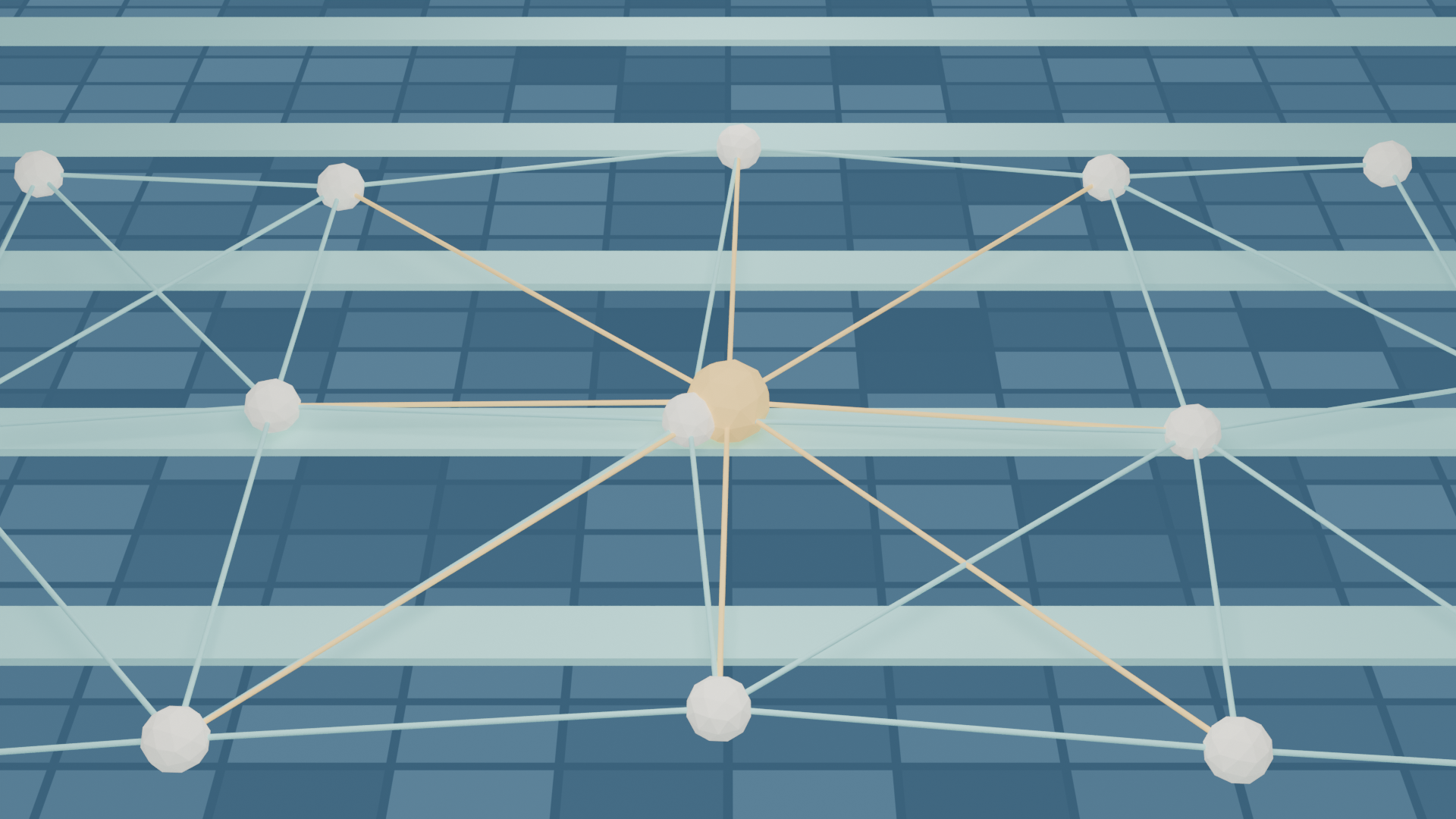
Pipeline: repeatable Blender 4.5 LTS Python scene scripts at deploy/render_still_0{1,2,3}.py — re-render any study by re-running its script. These are Cycles-CPU concept studies; final presentation renders would require a GPU workstation.
Architecture, in words
Four layers, one doctrine.
Proposed
The node
Soil moisture, temperature, and microclimate sensing at the row level, designed to run for seasons on modest power. Cheap enough to be replaceable; replaceable enough that no single node is precious.
Proposed
The mesh
Nodes would relay for one another over a low-power radio link — no ISP required between them. When a node drops, traffic would reroute through its neighbors. The network is designed to assume failure, because in the fields it would serve, failure is the normal condition.
Proposed
On-device intelligence
Readings would be interpreted where they are taken: irrigation scheduling, anomaly and fault detection, computed on the farm's own hardware. The uplink would be treated as a convenience for syncing, never as a requirement for knowing.
Proposed
Graceful degradation
Degradation would be specified, not improvised: full mesh → partitioned → single-node operation, each with guaranteed behaviors stated up front. The worst case the system is designed for is a lone node, still measuring, still advising, waiting for the mesh to return.
The engineering philosophy behind this architecture is argued at length in the treatise. The company's federal research lane is stated at /nsf/.